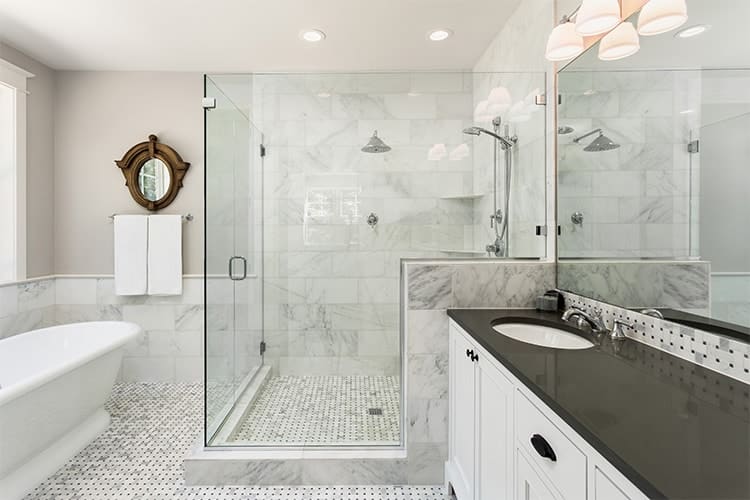
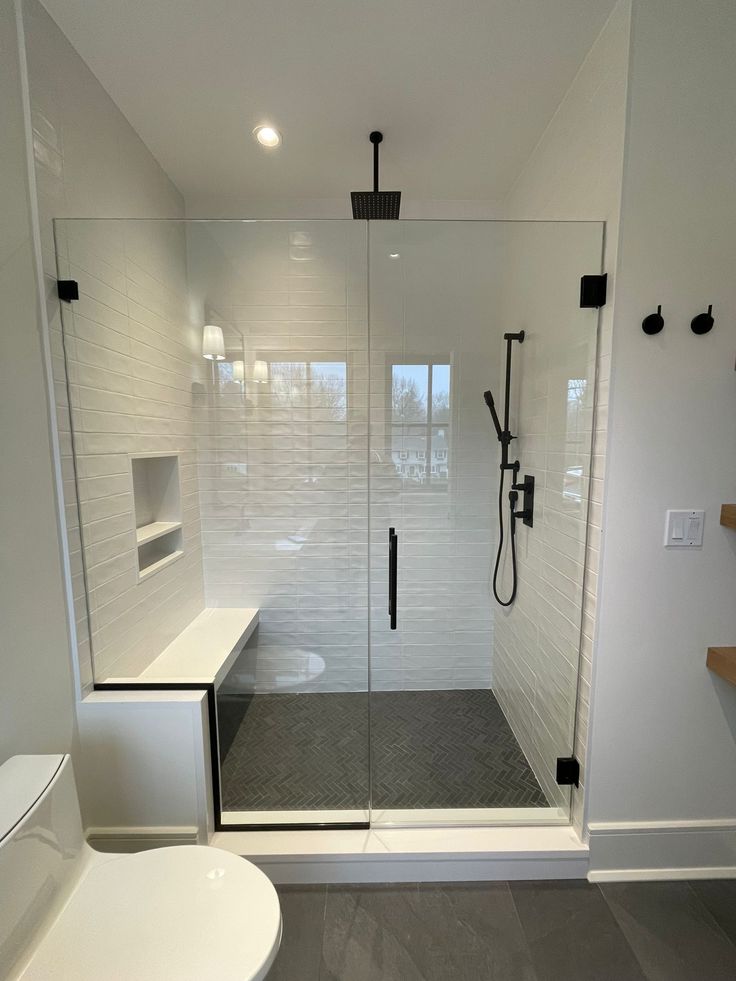
A steam shower glass enclosure is what turns an everyday bathroom into a spa, but it only works if the steam stays inside. It’s different from a regular shower door: it has to be fully sealed, reach the ceiling, and handle constant heat and moisture.
Here’s what makes steam shower glass different and what to plan for in your Vancouver bathroom renovation.
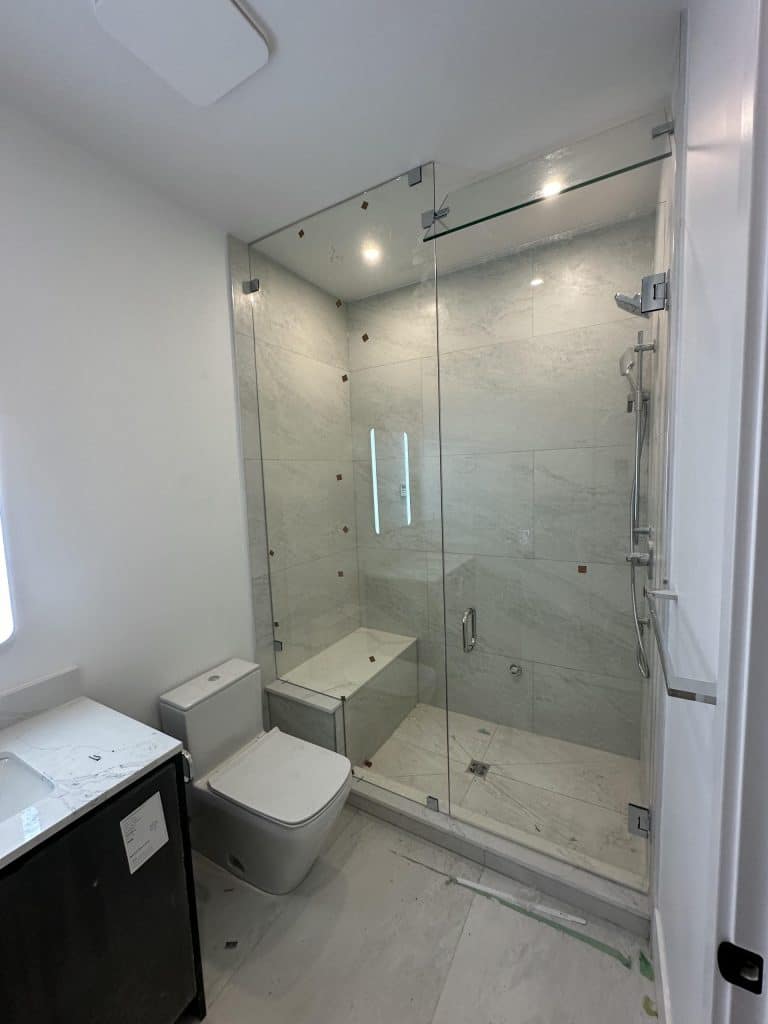
How a Steam Shower Glass Enclosure Differs From a Regular Shower
| Feature | Regular shower glass | Steam shower glass |
|---|---|---|
| Height | Usually stops below the ceiling | Floor to ceiling, or to a sealed header |
| Seals | Small gaps are normal | Fully sealed edges and door |
| Transom | Not needed | Often an operable transom or vent window |
| Door | Swings or slides | Must swing outward and seal tightly |
| Glass | 3/8″ common for frameless | 3/8″ or 1/2″ tempered, often low-iron |
Key Parts of a Steam Shower Enclosure
Floor-to-Ceiling Glass
Steam rises, so the enclosure has to go all the way up. Panels run to the ceiling or to a sealed header so steam can’t escape over the top.
Full Seals
Every edge is sealed: silicone where glass meets tile, and continuous seals along the door’s hinge side, latch side and bottom. Without them, steam leaks out and the generator works harder.

Transom or Vent
Many steam enclosures include an operable transom panel at the top. Open it to vent steam after use, or to use the enclosure as a normal shower without fogging the bathroom.
Outward-Swinging Door
Steam enclosure doors swing out of the enclosure, never in. Heavy-duty hinges carry the thicker glass.
Glass Choices for a Steam Shower
- Thickness: 3/8″ or 1/2″ tempered safety glass. Tall panels often use 1/2″ for rigidity. See Shower Glass Thickness: 3/8″ vs 1/2″.
- Low-iron glass: removes the green tint, which is more visible on tall, thick panels.
- Protective coating: helps condensation bead off and reduces spotting and mineral build-up.
- Frosted sections: add privacy where needed.
6 Essential Steam Shower Planning Tips
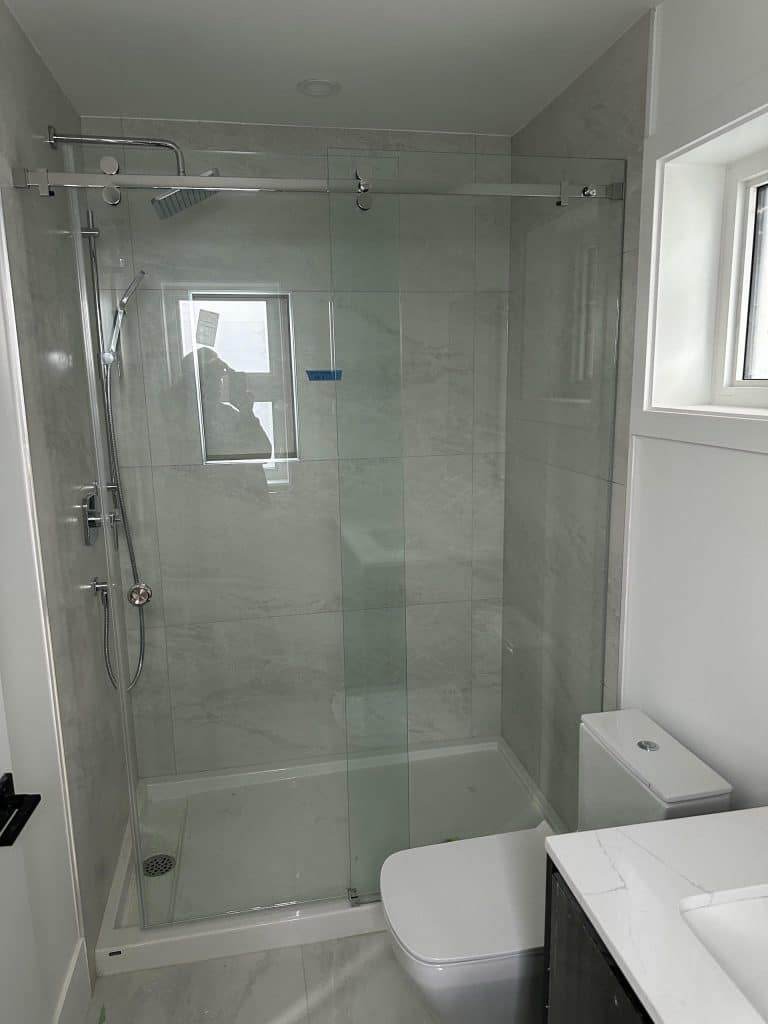
The glass is only one part. Talk to your contractor early about:
- Waterproofing and vapour barrier: walls and ceiling need a vapour-proof system designed for steam.
- Sloped ceiling: a slight slope stops condensation from dripping on you.
- Size: a smaller enclosure heats faster and uses a smaller generator.
- Generator location and electrical: plan access for service.
- Bench and controls: decide where you’ll sit and where the controls go.
- Solid backing: add blocking at hinge and clamp points for heavy glass.
Glass is measured after the tile is finished, so it’s one of the last steps.
How Big Should a Steam Shower Be?
Bigger isn’t always better with steam. Every extra cubic foot is space the generator has to fill, so a compact enclosure heats up faster, uses less energy and feels more comfortable. Ceiling height matters too: many steam showers use a lowered, sloped ceiling inside the enclosure instead of running to a tall bathroom ceiling. Your steam generator supplier will size the unit from the enclosure’s volume and materials, so settle the glass layout and ceiling height early.

Caring for Steam Shower Glass
- Open the transom or door after use to let the enclosure dry.
- Squeegee the glass to prevent water spots.
- Clean with a non-abrasive cleaner.
- Check seals periodically and replace worn ones.
More tips in How to Clean Bathroom Glass Partitions.
Common Mistakes to Avoid With Steam
- Stopping the glass short of the ceiling: steam escapes over the top and the room fills with moisture.
- Skipping the vapour barrier: moisture gets into the walls and can cause long-term damage.
- A flat ceiling: condensation collects and drips instead of running down the walls.
- An inward-swinging door: it’s harder to seal and less safe to exit.
- Measuring too early: the glass should be measured once all tile and stone is installed.

Is Adding Steam Worth It?
For many homeowners, steam at home is the feature they use most in a renovated bathroom. It adds a spa experience at home and can be built into a standard-size shower when it’s planned properly. The glass enclosure is a key part of that investment, because good seals and the right glass make the steam work efficiently and keep the bathroom dry. If you’re adding steam, involve your glass supplier early so the enclosure, ceiling and transom are designed together.
Choosing Hardware and Finishes
Hardware in a steam enclosure works harder than in a regular shower, because it sits in heat and moisture every time the steam runs. Choose hinges, clamps and handles made from solid brass or stainless steel with a quality finish, and make sure they’re rated for the weight of the glass. Popular finishes include polished chrome, brushed nickel, matte black and brushed brass. Chrome is the easiest to keep looking new; matte black looks striking against light tile but shows water marks, so a quick wipe after use helps.
Working With Your Contractor and Glass Installer
Building a steam room brings several trades together: the plumber installs the generator and steam head, the electrician wires the controls, the tile setter builds the waterproofed walls and sloped ceiling, and the glass installer finishes the enclosure. Problems usually happen when these steps aren’t planned together. Before work starts, agree on:
- The exact height of the ceiling or header the glass will seal to
- Where the steam head and controls go, so they’re away from the door
- Where blocking goes for the door hinges and any support bars
- Whether a transom is included, and whether it opens
- The finished size of the opening once tile and stone are installed
Sharing a simple drawing with these details helps everyone, and it means your steam shower glass enclosure can be measured and made once, without changes.
Steam Shower Glass Enclosure Layouts
- Alcove: glass across the front with a door and fixed panel, sealed to three tiled walls. The simplest and most efficient layout.
- Corner: two glass walls meeting at a corner, with the door on one side. Needs careful sealing at the glass-to-glass joint.
- Walk-in with door: a larger enclosure with a bench, often with a transom above the door.
- Combined tub and steam: possible, but harder to seal; usually built as a dedicated steam shower instead.
What a Steam Shower Glass Enclosure Costs
Pricing depends on the size of the enclosure, the glass thickness, whether a transom is included, the hardware finish and how many seals are needed. Floor-to-ceiling glass and an operable transom add to the cost compared with a standard shower door, and 1/2″ glass costs more than 3/8″. The best way to get an accurate number is to send us photos, rough dimensions and your ceiling height, and we’ll prepare a written quote once the tile is finished and measured.
Steam Shower Glass Enclosure Options Compared
| Option | Look | Steam seal | Best for |
|---|---|---|---|
| Frameless 1/2″ glass with transom | Cleanest, most open | Excellent with full seals | Primary bathrooms and spa-style renovations |
| Frameless 3/8″ glass with transom | Clean and modern | Very good with full seals | Most standard-size steam showers |
| Fixed panels with a glass header | Minimal hardware | Very good | Enclosures where the ceiling is higher than the glass |
| Partially framed glass | More visible metal | Good | Tight budgets or uneven walls |
Questions to Ask Your Glass Installer
- What glass thickness do you recommend for my panel sizes, and why?
- Will the enclosure seal to the ceiling, or to a glass header?
- Is an operable transom included, and how is it hinged?
- What seals do you use on the door, and how often should they be replaced?
- Is the glass low-iron, and does it have a protective coating?
- What hardware finish holds up best in steam?
- When will you measure, and what is the lead time for fabrication?
Clear answers to these questions are the best sign that your installer has built steam enclosures before, and they help you compare quotes fairly.
Energy and Comfort Tips
A well-sealed enclosure is the most important factor in how efficiently a steam generator runs. Gaps around the door or over the top let steam escape, so the generator runs longer to keep the temperature up. A sloped ceiling, stone or tile with good thermal mass, and a compact layout all help the enclosure heat quickly. After each session, open the transom or door so the glass, seals and tile can dry fully. These small habits keep the enclosure comfortable, efficient and looking new.
Steam Shower Glass FAQ
Can I convert my existing shower into a steam shower?
Sometimes, but it usually means new waterproofing, a vapour barrier, a sealed ceiling and new glass. A regular shower door can’t simply be reused.
Can a steam shower be frameless?
Yes. Frameless steam enclosures are common, using thick glass with full seals.
Will the glass fog up?
Some fogging is normal during steam use. A coating and venting after use help the glass clear quickly.
Is steam bad for glass?
No. Tempered glass handles heat and moisture well. Seals and hardware are the parts that need occasional attention.
Get a Steam Shower Glass Quote
Cypress Glass designs, fabricates and installs custom glass shower enclosures, including steam rooms, across Metro Vancouver from our North Vancouver shop. We’ll work with your contractor so the glass, seals and transom are planned properly. Financing is available.
Request a free quote or call (604) 727-6160.