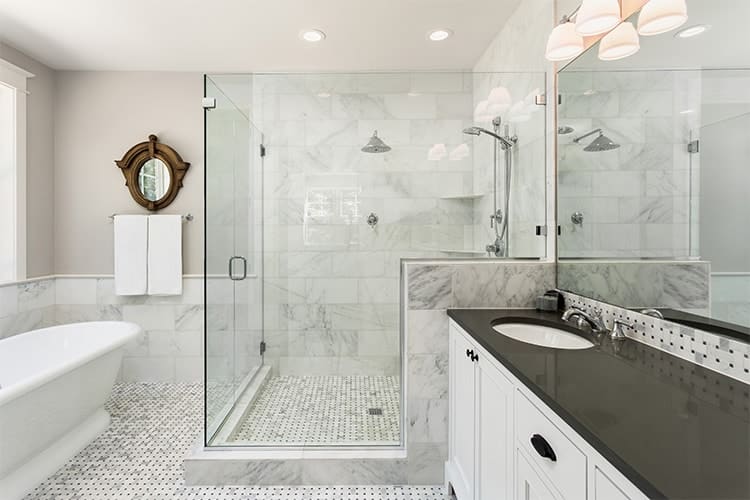
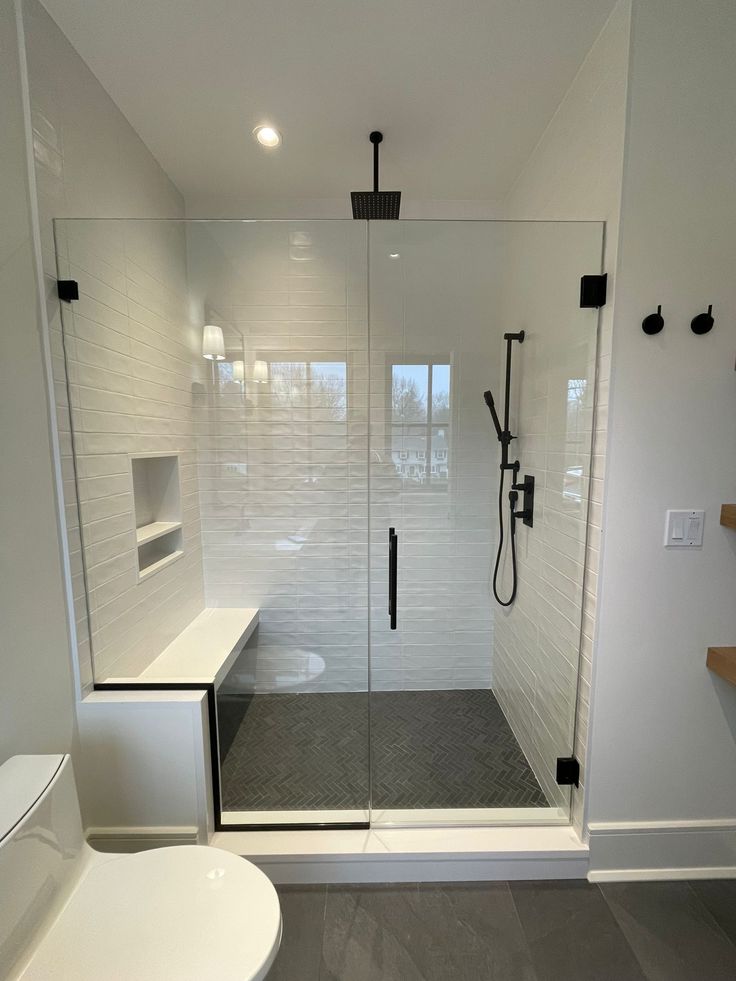
Shower glass thickness is easy to overlook when you compare quotes, but it affects how solid the door feels, which hardware you can use, how much support the walls need, and the final price. You’ll usually see 1/4″, 5/16″, 3/8″ or 1/2″ glass listed.
Here’s what each thickness is used for, and why 3/8″ vs 1/2″ shower glass is the decision most homeowners end up making.

Shower Glass Thickness at a Glance
| Thickness | Typical use | Feel | Relative cost |
|---|---|---|---|
| 1/4″ (6 mm) | Framed and many sliding doors | Light; relies on the frame | $ |
| 5/16″ (8 mm) | Semi-frameless doors and panels | Firmer than 1/4″ | $$ |
| 3/8″ (10 mm) | Most frameless doors and enclosures | Solid, stable | $$$ |
| 1/2″ (12 mm) | Premium frameless doors, tall or wide panels, fixed screens | Very solid and substantial | $$$$ |
3/8″ vs 1/2″ Shower Glass
3/8″ Glass: The Frameless Standard
3/8″ tempered glass is the most common choice for frameless shower doors. It’s rigid enough to stand on its own with hinges and clamps, lighter on the hinges and walls than 1/2″, and costs less. For a typical door and panel, it’s a reliable, good-looking choice.
1/2″ Glass: The Premium Option
1/2″ glass feels heavier and more solid when you open and close the door, and the thicker edge looks more substantial. It’s often chosen for:
- Wide doors or tall panels, including floor-to-ceiling steam showers
- Walk-in showers with a single fixed panel and no door
- High-end renovations where the feel of the door matters
The trade-offs are cost and weight. 1/2″ glass needs heavy-duty hinges and solid blocking behind the tile, and it adds noticeably to the price.

Thinner Shower Glass: 1/4″ and 5/16″
Thinner glass is used where a frame or channel supports it, such as framed, semi-frameless and many sliding shower doors. It’s lighter and more economical, which makes it a good fit for secondary bathrooms and rental suites. For a full comparison of styles, see Frameless vs Semi-Frameless Shower Doors.
Is Thicker Glass Safer?
All shower glass should be tempered safety glass, whatever the thickness. Tempered glass is much stronger than regular glass and breaks into small, blunt pieces instead of sharp shards. Thicker glass is stiffer and flexes less, which is why frameless doors use it, but safety comes from tempering and correct installation. Learn more in What Type of Glass Must Be Used in Shower Enclosures?

Other Glass Choices That Matter
- Low-iron glass: standard glass has a slight green tint, most visible on thick edges. Low-iron glass is clearer and shows your tile’s true colour.
- Frosted or patterned glass: adds privacy in shared bathrooms.
- Protective coating: a factory-applied coating helps water bead off and makes cleaning easier.
How Thickness Affects Hardware
Glass thickness and hardware go together. Hinges, clamps and handles are rated for a specific thickness and weight, so a 1/2″ door needs heavier hinges than a 3/8″ door. Using the right hardware keeps the door from sagging and helps it close smoothly for years.
- Hinges: wall-mount or glass-to-glass hinges sized for the door’s weight and width.
- Clamps or channels: fixed panels are held by clamps or a low-profile U-channel.
- Support bars: wide fixed panels may need a support bar to the wall or ceiling.
- Handles: through-glass handles need holes drilled before the glass is tempered.

How to Choose the Right Thickness
- Pick your style first. Frameless usually means 3/8″ or 1/2″; framed or semi-frameless usually means thinner glass.
- Consider panel size. Wide doors and tall panels often benefit from 1/2″.
- Check the walls. Heavier glass needs solid blocking at hinge points.
- Set your budget. 3/8″ gives the frameless look at a lower cost than 1/2″.
For price ranges by style, read Frameless Shower Door Cost in Vancouver.
Planning Tips for Your Renovation
The best time to think about shower glass thickness is before the tile goes up. If you want heavy frameless glass, ask your contractor to add solid blocking in the walls where the hinges will go. Decide on the showerhead position so water is aimed away from the door gaps, and make sure the curb or floor slopes back into the shower. Glass is measured once the tile is finished, then made to order, so leave time in your schedule for fabrication. Planning these details early is what makes a frameless shower look effortless.
Shower Glass Thickness by Shower Type
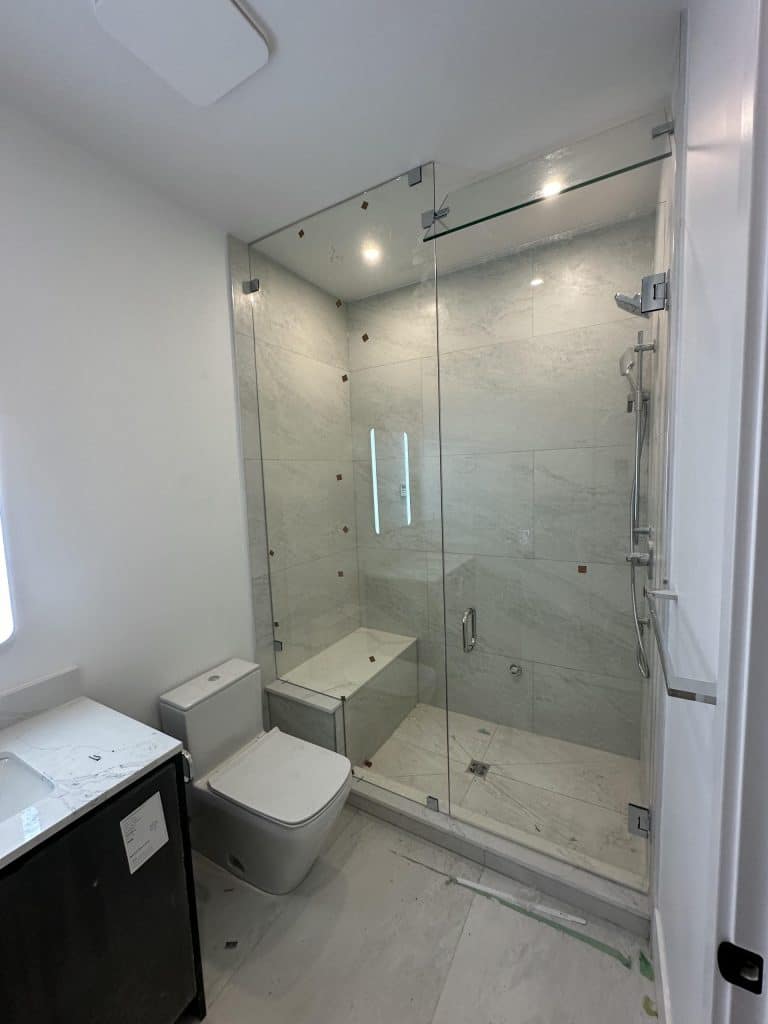
Different shower layouts call for different glass. Here’s what we typically recommend:
- Single swing door in an alcove: 3/8″ frameless glass is the sweet spot for looks, feel and cost.
- Door with a fixed side panel: 3/8″ for both pieces keeps the look consistent; 1/2″ if the panel is very wide or tall.
- Corner or neo-angle shower: 3/8″ glass with glass-to-glass clamps or hinges.
- Walk-in shower with one fixed screen: 3/8″ or 1/2″, often with a support bar for stability.
- Bathtub screen: 3/8″ glass is common, either fixed or with a hinged panel.
- Sliding shower door: 1/4″ or 5/16″ for framed systems; 3/8″ or thicker for frameless rollers.
- Steam shower: 3/8″ or 1/2″ floor-to-ceiling glass with full seals and a transom.
Common Mistakes to Avoid
- Choosing thick glass without wall backing: heavy glass on weak walls can lead to sagging doors and loose hinges.
- Mixing thicknesses: a 3/8″ door next to a 1/2″ panel can look uneven at the edges.
- Skipping the coating: uncoated glass shows water spots faster, especially on large frameless panels.
- Measuring before the tile is done: frameless glass is made to exact sizes, so it should be measured on finished walls.
Avoiding these mistakes is the easiest way to get a shower door that looks great and works smoothly for years.
Does Shower Glass Thickness Affect the Price?
Yes. Thicker glass costs more to make and needs heavier hardware, so 1/2″ glass costs noticeably more than 3/8″ for the same opening. Low-iron glass, frosted finishes and protective coatings add to the price as well. For most frameless showers, 3/8″ glass gives the best balance of solid feel, looks and value, and it’s the thickness we recommend most often. Choose 1/2″ when the panels are very large or you want the most substantial feel.
Shower Glass Thickness FAQ
What is the most common shower glass thickness?
For frameless showers, 3/8″. For framed and sliding doors, 1/4″ is common.
Is 1/2″ glass worth the extra cost?
If you want the most solid feel or have large panels, yes. For a standard door and panel, 3/8″ performs very well.
Can thick glass be used on a sliding door?
Yes. Some frameless sliding systems are designed for 3/8″ or 1/2″ glass with heavy-duty rollers.
Does thicker glass stay cleaner?
No. Thickness doesn’t affect cleaning; a protective coating and a squeegee do.
Get Help Choosing Your Shower Glass
Cypress Glass designs, fabricates and installs custom shower doors and glass shower enclosures across Metro Vancouver. We’ll recommend the right glass thickness for your layout, walls and budget. Financing is available.
Request a free quote or call (604) 727-6160.