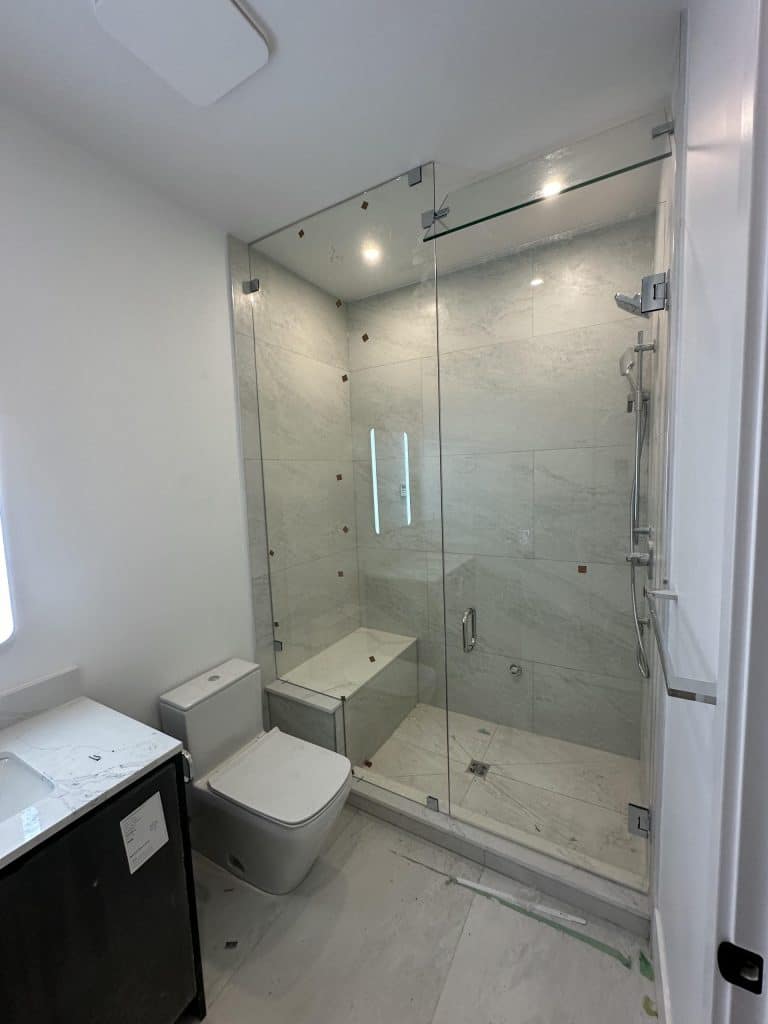
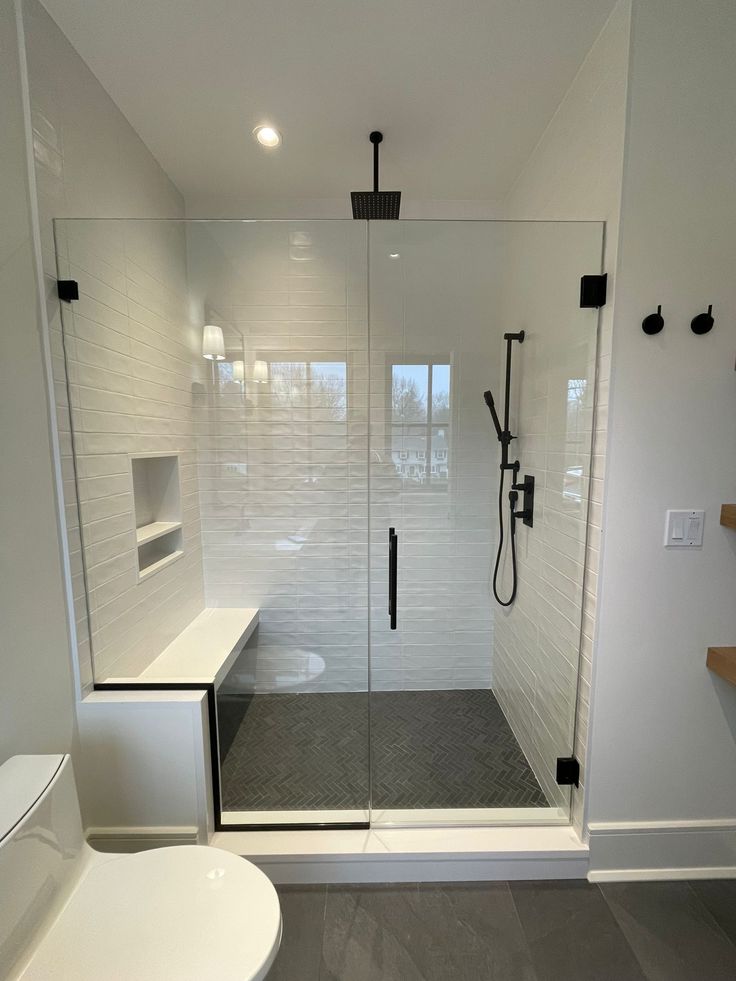
Frameless vs semi-frameless shower doors is one of the first glass decisions in any bathroom renovation. Both look modern, both use tempered safety glass, and both can be built to fit your shower. The difference is how much metal you see, how the glass is supported, and what that means for price, water control and cleaning.
Here’s how the two compare, so you can choose the right shower glass for your Vancouver home.
Quick Answer
A frameless shower door uses thick glass held by hinges and clamps, with little or no visible metal. It gives the cleanest, most open look and is easier to wipe down, but it costs more.
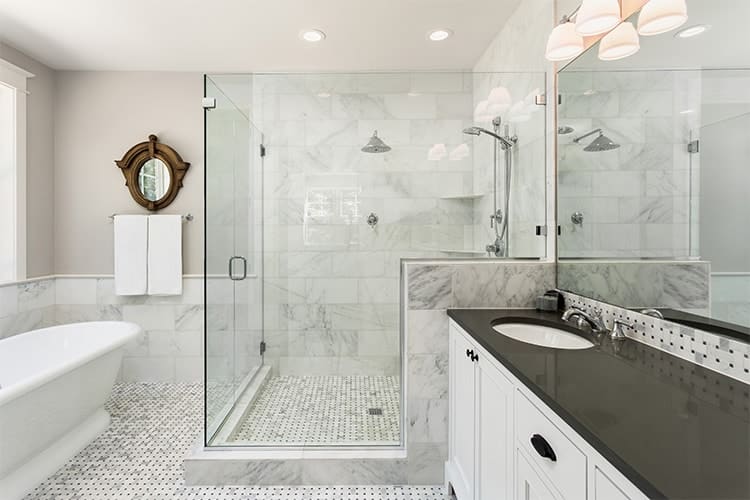
A semi-frameless shower door uses thinner glass with metal framing on some edges, usually around the fixed panels or the perimeter, while the door itself is often unframed. It costs less and can seal more tightly, with a slightly busier look.
Frameless vs Semi-Frameless Shower Doors: 7 Key Differences
| Factor | Frameless | Semi-frameless |
|---|---|---|
| Look | Clean, minimal, almost invisible | Modern with some visible metal |
| Glass thickness | Typically 3/8″ or 1/2″ | Typically thinner, often 1/4″ |
| Support | Heavy-duty hinges and clamps into solid backing | Metal channels and framing share the load |
| Cost | Higher | Lower |
| Water control | Small gaps around the door; relies on seals and layout | Framing can help reduce gaps |
| Cleaning | Easy; few places for soap scum to collect | Framing edges need extra attention |
| Wall requirements | Solid backing at hinge points | More forgiving |
Why Choose a Frameless Shower Door
The Cleanest Look
With no frame around the glass, a frameless shower lets your tile, fixtures and stone become the focus. In smaller Vancouver bathrooms and condos, that clear look also makes the room feel larger and brighter.
Easier Cleaning
Frames and tracks are where soap scum, mildew and water collect. Frameless glass has fewer edges and corners, so a quick squeegee after each shower goes a long way.
Custom Fit
Frameless glass is cut to the exact size of your opening, which works well for walk-in showers, steam showers, knee walls and sloped ceilings. For pricing, see our Frameless Shower Door Cost in Vancouver guide.
Why Choose a Semi-Frameless Shower Door
Lower Cost
Thinner glass and simpler hardware make semi-frameless doors the more budget-friendly option, which is useful for rental suites, secondary bathrooms and tight budgets.
Better for Walls That Aren’t Perfect
Older homes often have walls that are out of plumb or lack solid backing. Framing channels can absorb small variations and spread the load, so the door works reliably without major wall work.
Tighter Water Control
Framed edges can reduce gaps where water escapes. That helps for showers where the spray hits the door directly or the floor isn’t sloped well.

Things to Check Before You Decide
- Wall backing: frameless hinges need solid blocking behind the tile. If you’re renovating, plan blocking before the walls are closed.
- Shower layout: where the showerhead points affects how much water reaches the door and gaps.
- Door swing: the door should open outward, with enough clearance for the vanity and toilet.
- Hardware finish: chrome, brushed nickel, matte black and brushed brass should match your fixtures.
- Glass options: clear, low-iron, frosted or patterned glass, plus protective coatings that make cleaning easier.
Not sure about glass thickness? Read Shower Glass Thickness: 3/8″ vs 1/2″.
Which Is Better for Small Bathrooms?
Frameless glass usually feels more open, but in a very tight space a sliding or semi-frameless door may be more practical because it doesn’t need swing clearance. See Why Sliding Shower Doors Are Perfect for Small Bathrooms and Different Types of Shower Doors.
Cost: Frameless vs Semi-Frameless
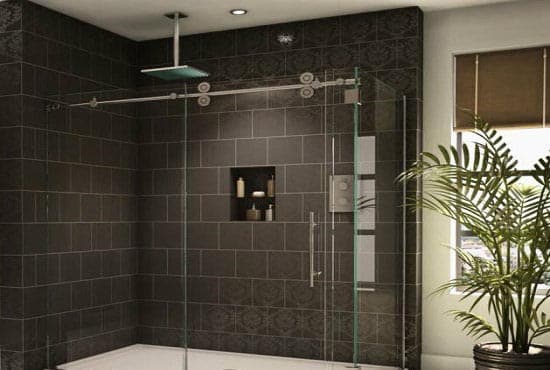
Price is often the deciding factor. A frameless shower door costs more because it uses thicker glass, heavier hinges and more precise fabrication. Semi-frameless doors use thinner glass and simpler hardware, so they usually come in lower for the same opening.
The final price for either style depends on a few things:
- Size and shape: a single door is simpler than a door with fixed panels, a return panel or a neo-angle layout.
- Glass type: clear glass is the base price; low-iron, frosted or patterned glass costs more.
- Hardware finish: chrome is standard, while matte black, brushed nickel and brass usually add cost.
- Protective coating: a factory coating adds a little upfront but saves cleaning time for years.
- Site conditions: out-of-plumb walls, sloped ceilings or knee walls need more custom work.
How Installation Works
Both styles follow a similar process, but frameless glass leaves less room for error, so measuring matters even more.
- Site measure: we measure after the tile is finished, checking walls for plumb and confirming backing for hinges.
- Fabrication: glass is cut, edges are polished, hinge and handle holes are drilled, then the glass is tempered. Tempered glass can’t be cut afterwards, which is why accurate measuring comes first.
- Installation: panels are set, hinges and clamps are fastened into solid backing, and the door is adjusted so it swings and closes smoothly.
- Sealing: seals, sweeps and silicone are added where needed, and the silicone is left to cure before the first shower.
Keeping Your Shower Glass Looking New
Whichever style you choose, a little routine care keeps the glass clear:
- Squeegee the glass after each shower to stop water spots forming.
- Use a non-abrasive cleaner and a soft cloth; avoid scouring pads.
- Keep the bathroom fan running during and after showers to reduce moisture.
- On semi-frameless doors, wipe the framing channels so soap scum doesn’t build up.
- Check seals and sweeps once a year and replace any that are worn.
For more tips, read How to Clean Bathroom Glass Partitions.
Our Recommendation
If your budget allows and your walls have solid backing, a frameless shower door gives the cleanest look and the easiest cleaning, and it’s the choice most homeowners are happiest with in a primary bathroom. If you’re updating a rental suite, a secondary bathroom or an older home with uneven walls, a semi-frameless door is a smart, durable option that still looks modern. When you’re unsure, send us photos of your shower and we’ll tell you which option suits the space.
Frameless vs Semi-Frameless FAQ
Do frameless shower doors leak?
A well-designed frameless shower with the right seals, sweeps and layout keeps water in for normal use. Small gaps are part of the design, so showerhead placement and floor slope matter.
Is frameless glass safe?
Yes. Shower doors use tempered safety glass, and frameless doors use thicker glass for extra rigidity. Safety glazing in bathrooms is also covered by the BC Building Code.
Can I upgrade from a framed door to frameless?
Often, yes. The main question is whether the wall has solid backing for the hinges. We check this when we measure.
Which adds more value to a home?
Frameless glass is usually seen as the more premium finish, which buyers notice in renovated bathrooms.
Get a Custom Shower Door Quote
Cypress Glass designs, fabricates and installs custom frameless and semi-frameless glass shower doors and shower enclosures across Metro Vancouver, from our North Vancouver shop. Send us photos and rough measurements and we’ll recommend the right option for your bathroom. Financing is available.
Request a free quote or call (604) 727-6160.